
Truck Loading Platforms
Tanker trucks load differently from hopper trucks, and each fleet brings its own hatch positions and turnover demands. Safe Harbor Access Systems builds truck loading platforms and truck loading equipment engineered around the vehicles your team services, not a generic platform sized for the wrong fleet.
Cab-over trucks and conventional trucks position hatches and walkways at different points along the trailer, and our engineering team accounts for this difference when designing all our loading platforms for trucks. We manufacture every system in-house at our Florence, South Carolina, facility, giving procurement teams a single source for engineering and fabrication.
Engineered Around Your Truck and Trailer Fleet
Trailer height changes the entire loading platform design. A liquid tanker trailer sits differently on its suspension depending on load weight, so the hatch position for a full load looks different from that of the same trailer empty. A dry bulk trailer holds a more consistent profile, which changes how much vertical travel the platform needs. Safe Harbor accounts for this variability with self-leveling gangways that follow the trailer as its height shifts during loading, rather than forcing your drivers to climb a fixed staircase that no longer lines up with the hatch.
Mixed fleets add another layer of variation. A facility that services single-hatch and multi-hatch trucks, or that runs a mixed fleet of vehicle types side by side, needs a platform that adapts to each configuration without slowing the loading schedule. Our engineering team reviews your fleet mix before finalizing a design, so the platform works for the trucks you run today and the ones you add later.

Truck Loading Platform Configurations
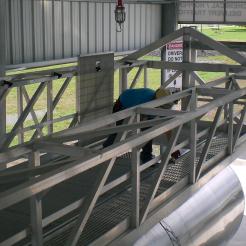
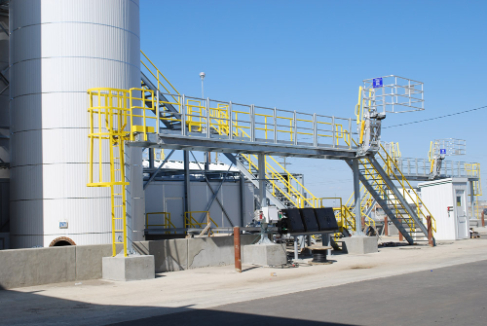
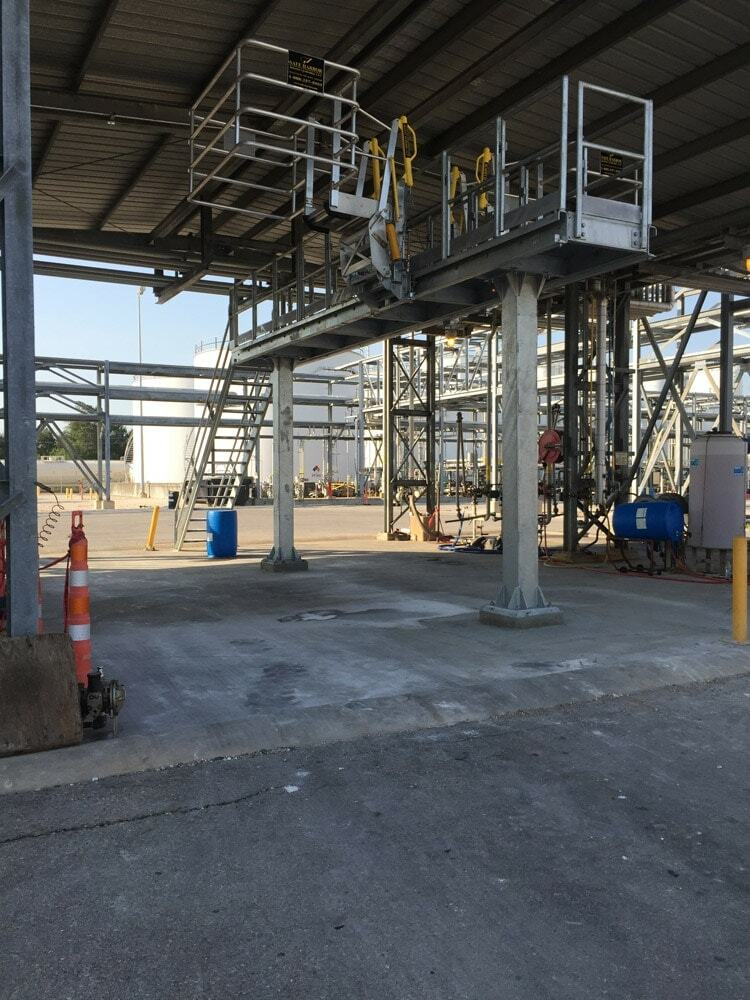
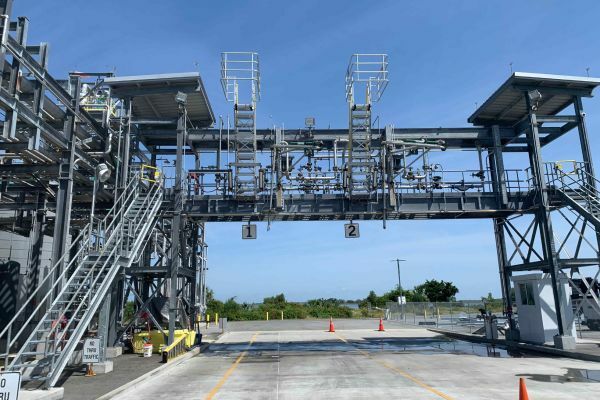
We build truck loading platforms around the way your trailers load, not a single fixed template. Configuration options include:
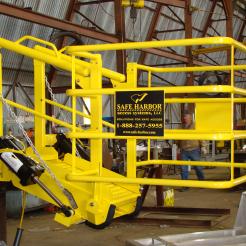
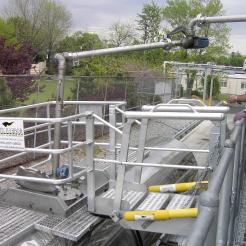
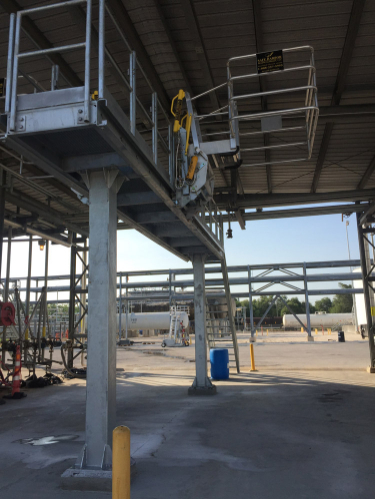
- Self-leveling stair gangways: Adjust automatically as trailer height changes with load weight, common with liquid tanker trucks.
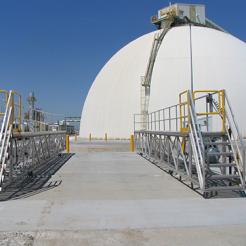
- Flat ramp gangways: Best for hopper trucks and dry bulk trailers that hold a consistent working height.
- Track-mounted gangways: Travel horizontally, so one system can reach multiple hatch positions across a mixed fleet without repositioning the truck.
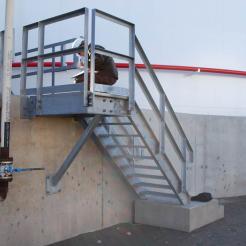
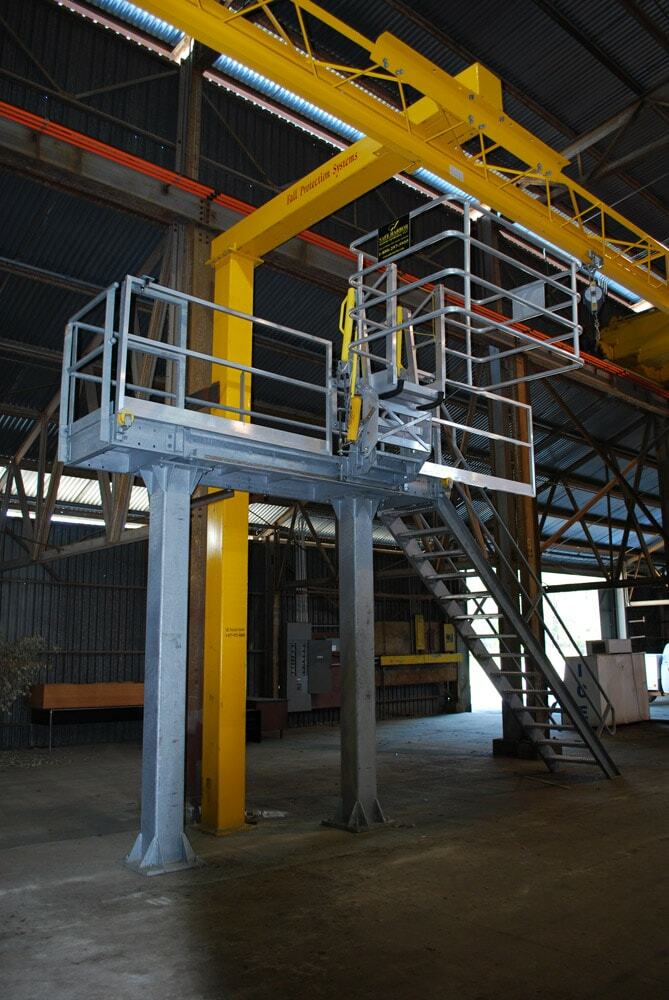
Each configuration includes guardrails and access stairs sized to your platform height, plus safety cages where your application calls for them.
OSHA Fall Protection Requirements for Truck Loading
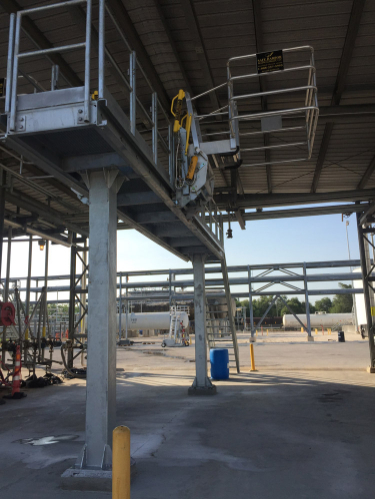
OSHA's General Industry Fall Protection Standard, 29 CFR 1910.28, requires employers to protect workers on a walking or working surface that is four feet or higher above a lower level. OSHA does not classify the top of a truck or trailer as a walking or working surface under that standard, but the General Duty Clause of the OSH Act still requires employers to protect workers from recognized fall hazards when a feasible means of protection exists. Drivers and operators climb onto tanker and hopper trucks to open hatches and connect hoses during loading and unloading, and a fixed platform with guardrails is one of the most effective ways to meet that obligation.
Safe Harbor designs every truck loading platform to meet OSHA standards, including the fall protection system criteria in 1910.29, with guardrails and access points that fit the way your crew works the load. Our fall protection systems cover loading racks and raised walkways.
Why Operators Choose Safe Harbor Truck Loading Equipment
We manufacture all our truck loading platforms at our South Carolina facility, so procurement teams work with one company for engineering and fabrication rather than splitting the project across vendors. Energy and chemical operations turn to Safe Harbor for truck loading equipment. So do food and beverage producers and distribution centers, whether they need a single spot or a multi-bay terminal to run without unplanned downtime. For projects that require them, we provide stamped engineering drawings and load documentation for your safety team to keep on file.
Get a Quote for Your Truck Loading Platform
Tell us about your trailer types and loading volume, and we will return a configuration built for your fleet. Our engineers confirm trailer height and hatch position with your team before finalizing a single drawing. Submit a quote request today and get a truck loading platform sized for the way your operation runs.
Frequently Asked Questions About Truck Loading Platforms
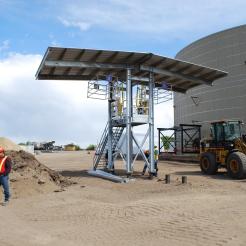
Not always, but outdoor loading sites that face rain or direct sun often add a canopy to keep the platform surface drier and more comfortable for workers during long loading cycles. Wet or icy walking surfaces increase the risk of slips even on a fully guarded platform, so operations that run night shifts or handle weather-sensitive products frequently pair a truck loading platform with a canopy.
A loading dock sits at trailer-bed height in the side of a building, so forklifts and workers move freight through the trailer's side or rear doors. A truck loading platform provides raised access to the top of the vehicle, which is what tanker and dry bulk trailers need for hatch access during top loading. The two serve different loading methods, and a facility that handles freight and bulk products often needs both types of access on site.
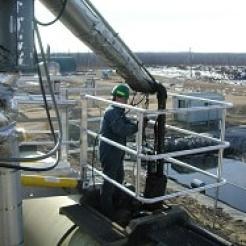
Yes. Tanker trucks handling liquid or gas products often load through a top-mounted arm that connects to a vapor recovery system, and the platform needs to position the operator at the right height and distance to connect safely. We coordinate platform design with your loading arm configuration, so the gangway and guardrail line up with the connection point at the hatch.
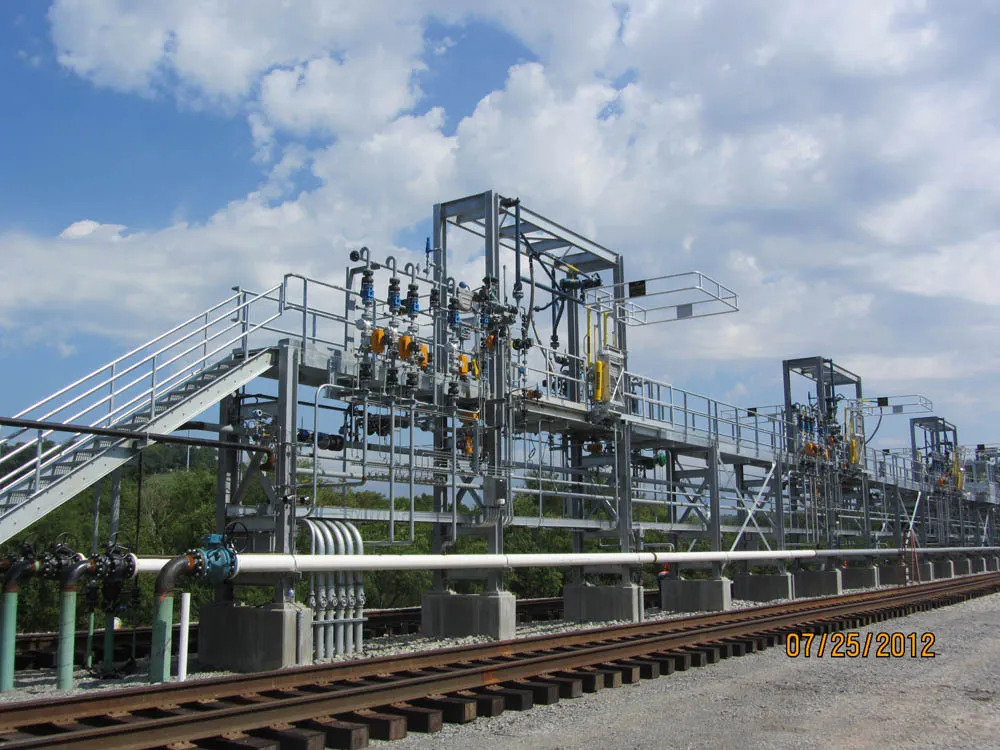
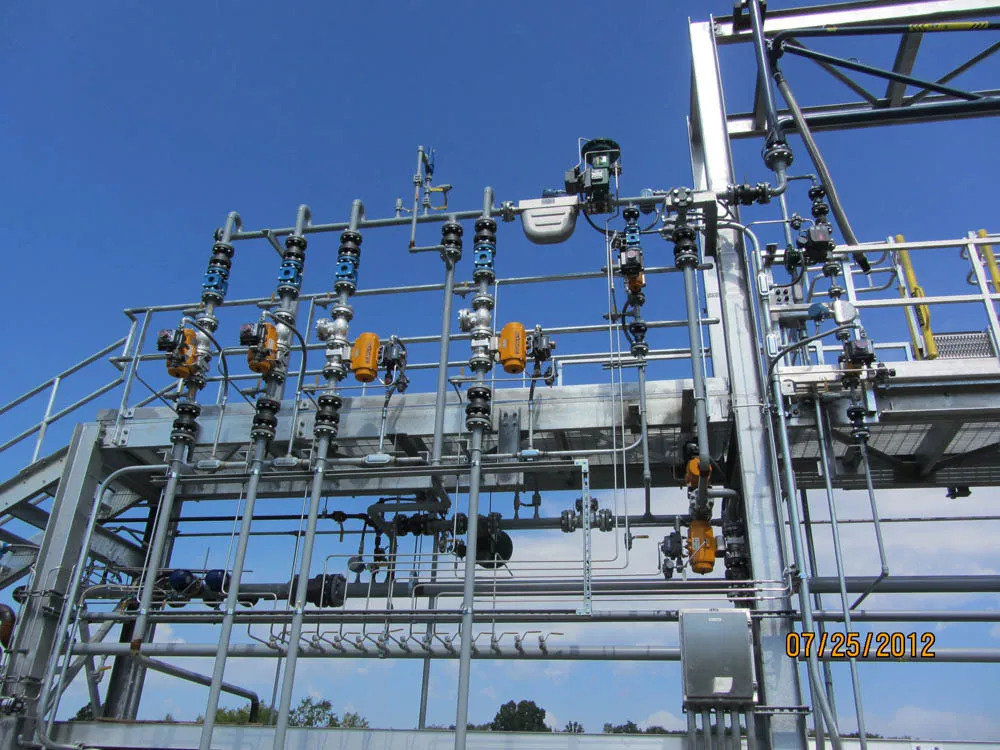
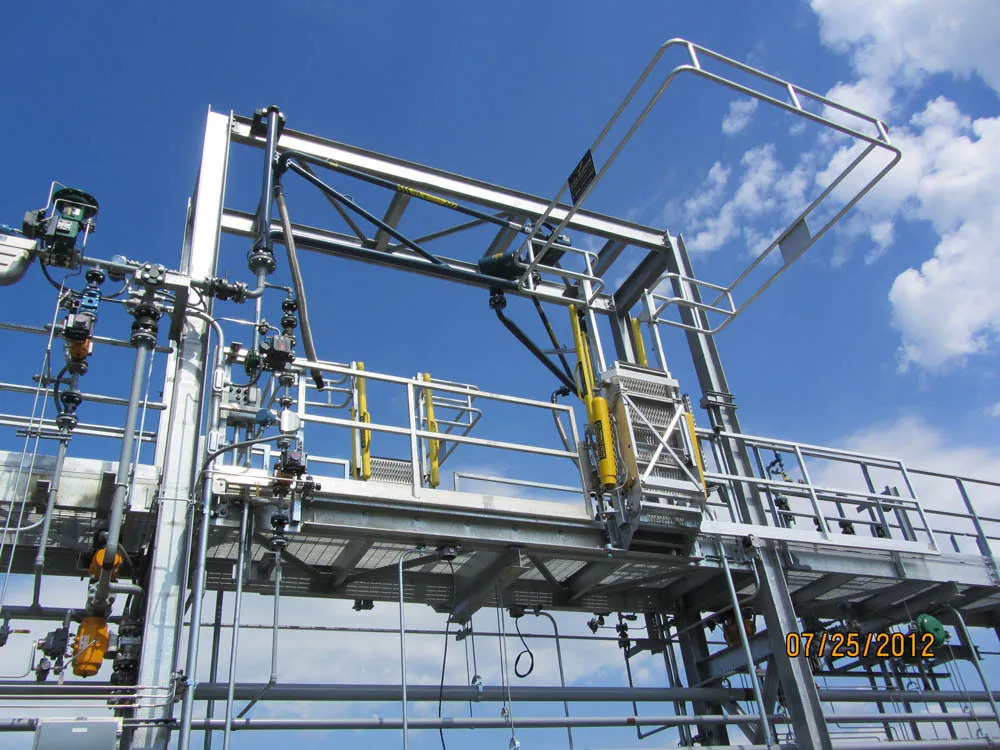
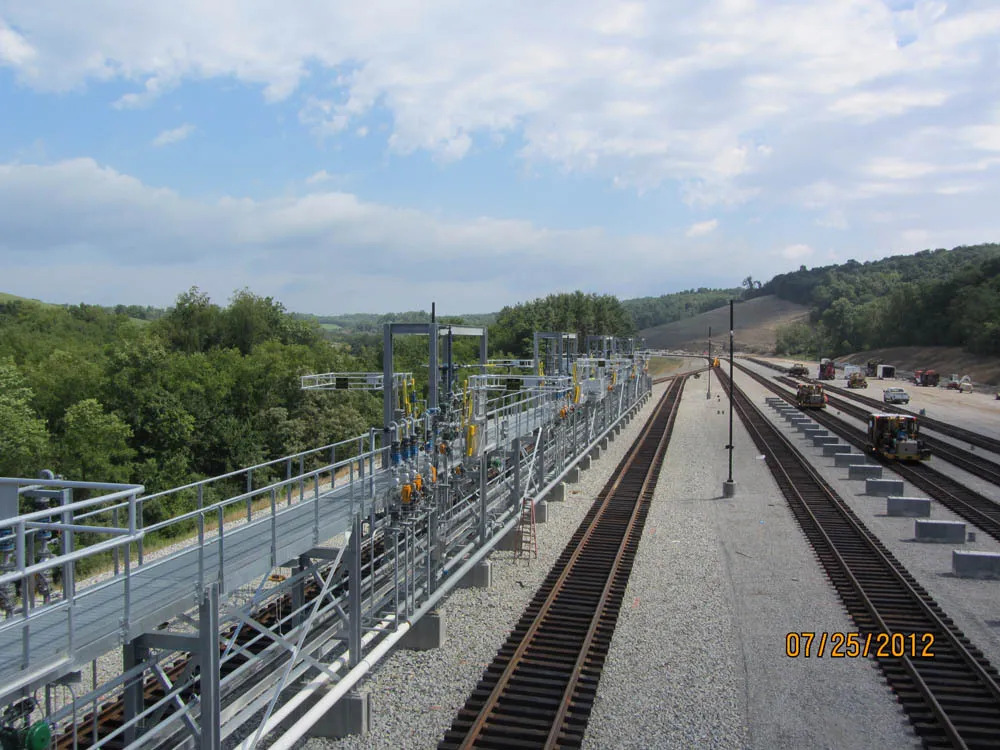
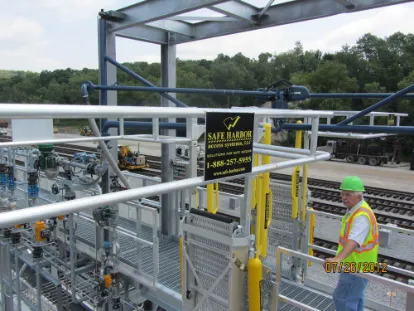
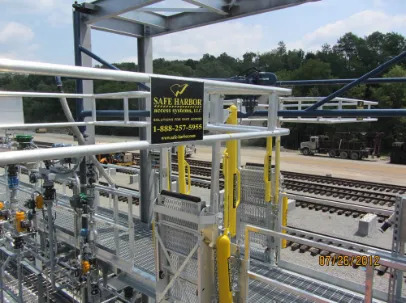
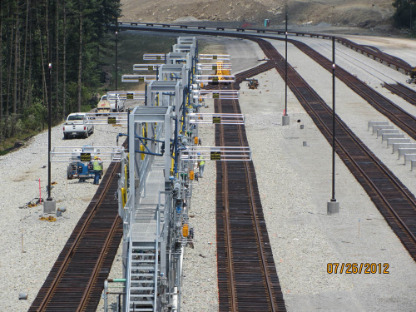
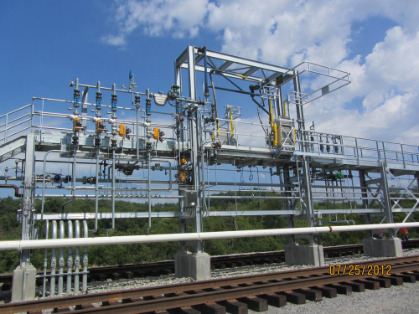
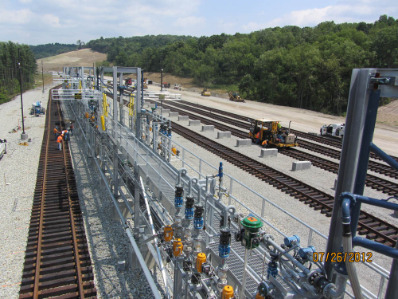
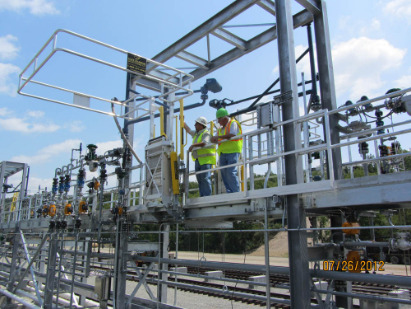
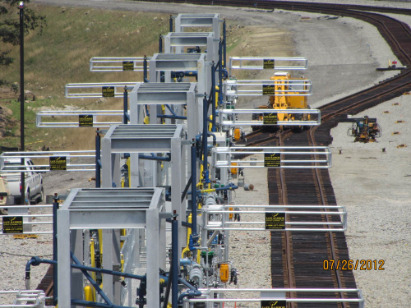
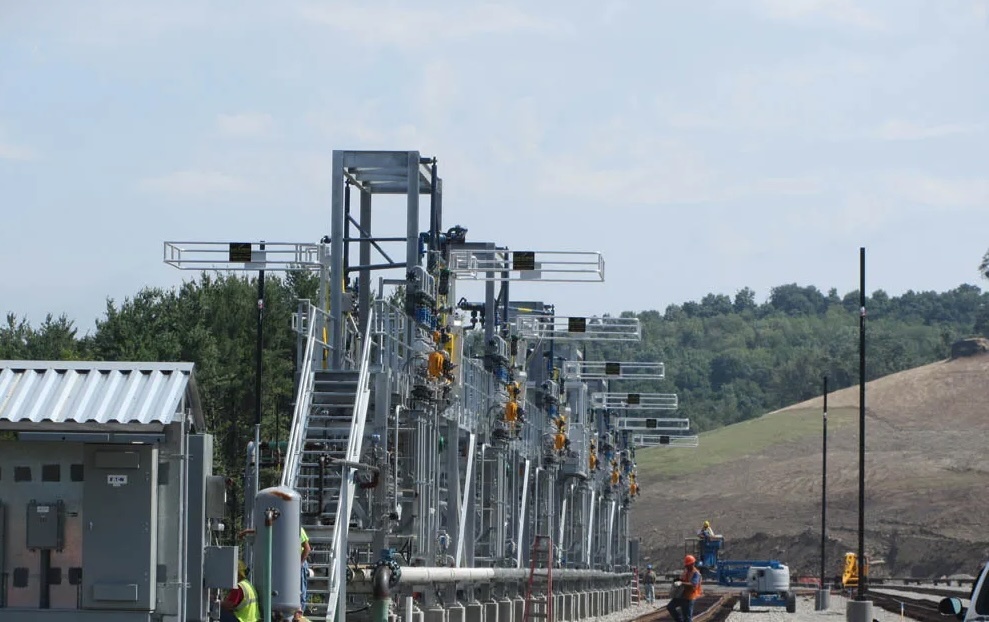
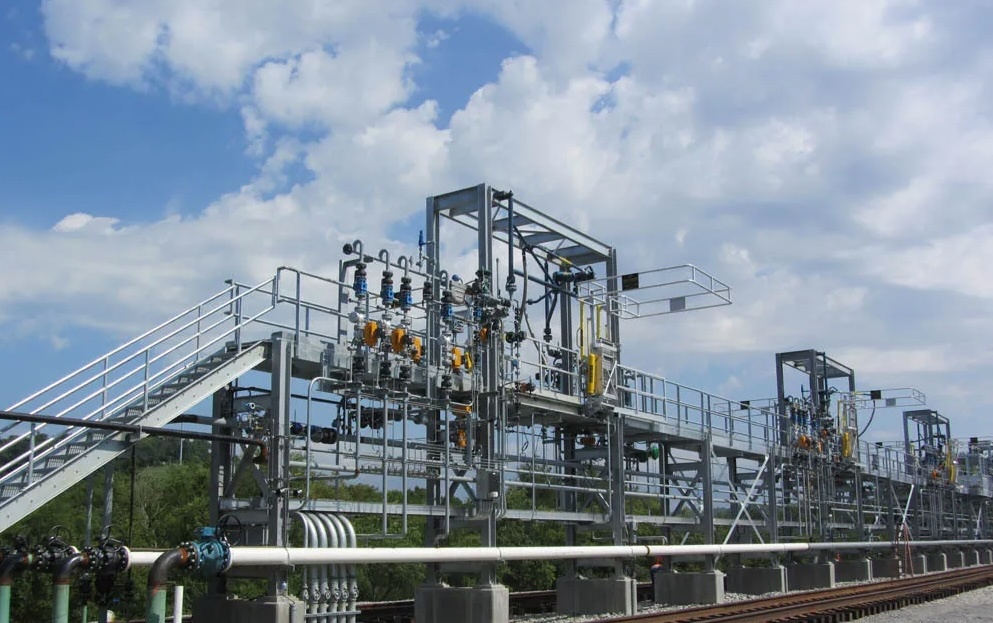
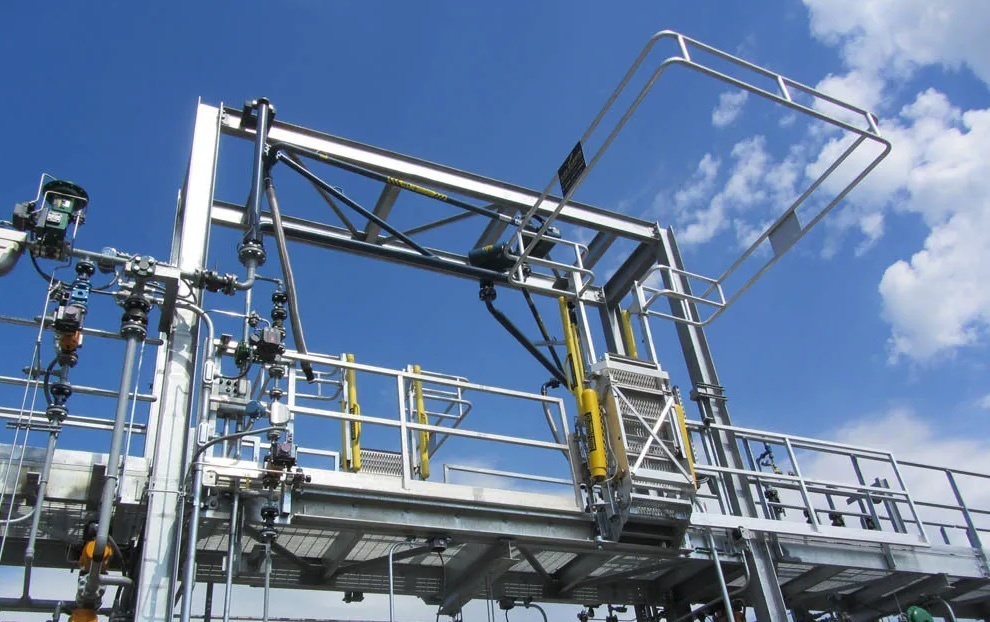
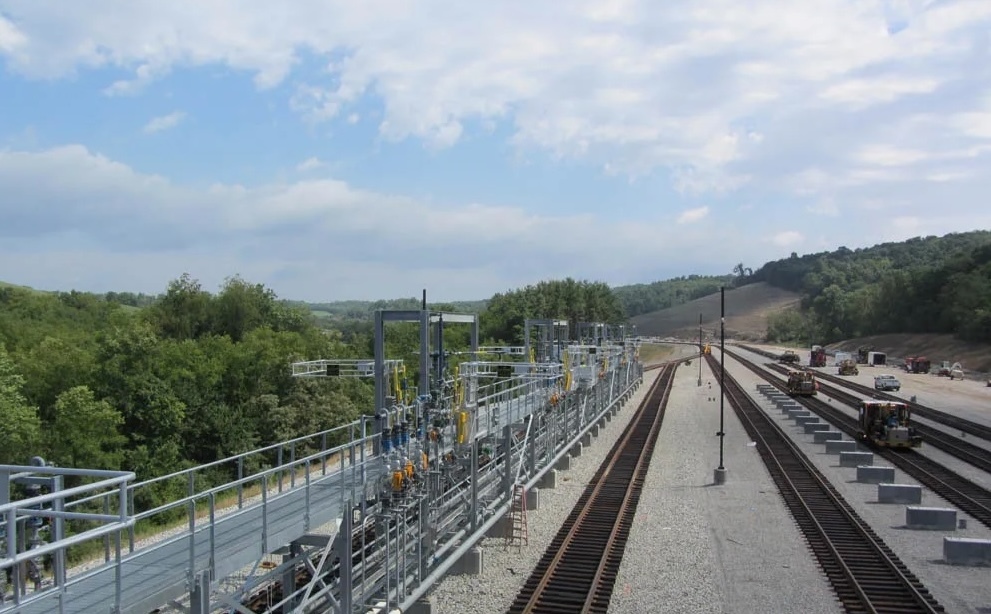
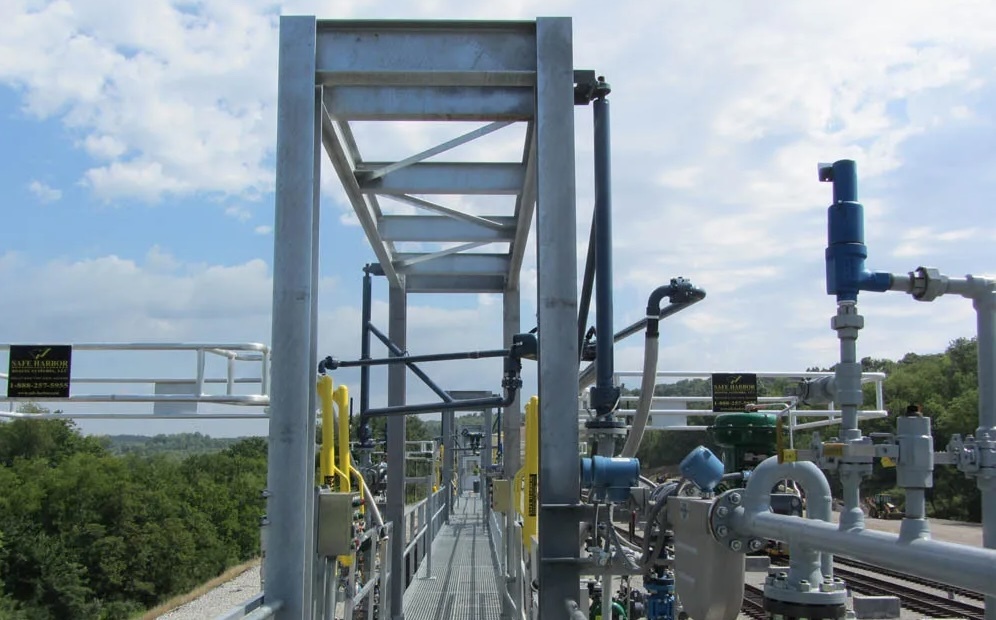
safe harbor’s LOADING RACKS
similar products
Safe Harbor Access Systems fabricates terminals, platforms and fall protection equipment to meet general and unique application requirements.