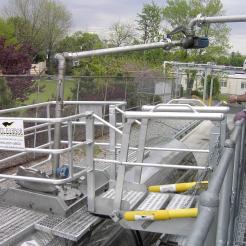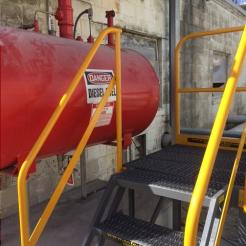

Loading Racks and Industrial Loading Platforms
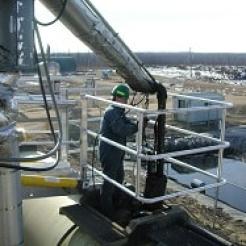
Workers climbing onto tankers, hoppers, and railcars without proper fall protection face one of the highest fatality risks in any industrial operation. Loading racks solve this problem by providing engineered, OSHA-compliant access to the tops of trucks and railcars, allowing crews to load, unload, sample, and inspect safely no matter the vehicle profile or site conditions.
Safe Harbor designs and manufactures industrial loading racks for the bulk material, chemical, oil and gas, and food and beverage industries. Every system is engineered around the specific vehicles, throughput, and footprint of the facility it serves, so operators get fall protection that fits the work rather than a generic platform forced into the wrong space.
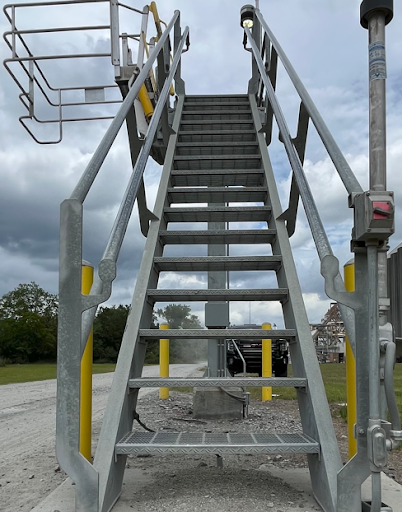
Built for the Realities of Industrial Loading
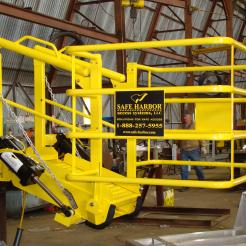
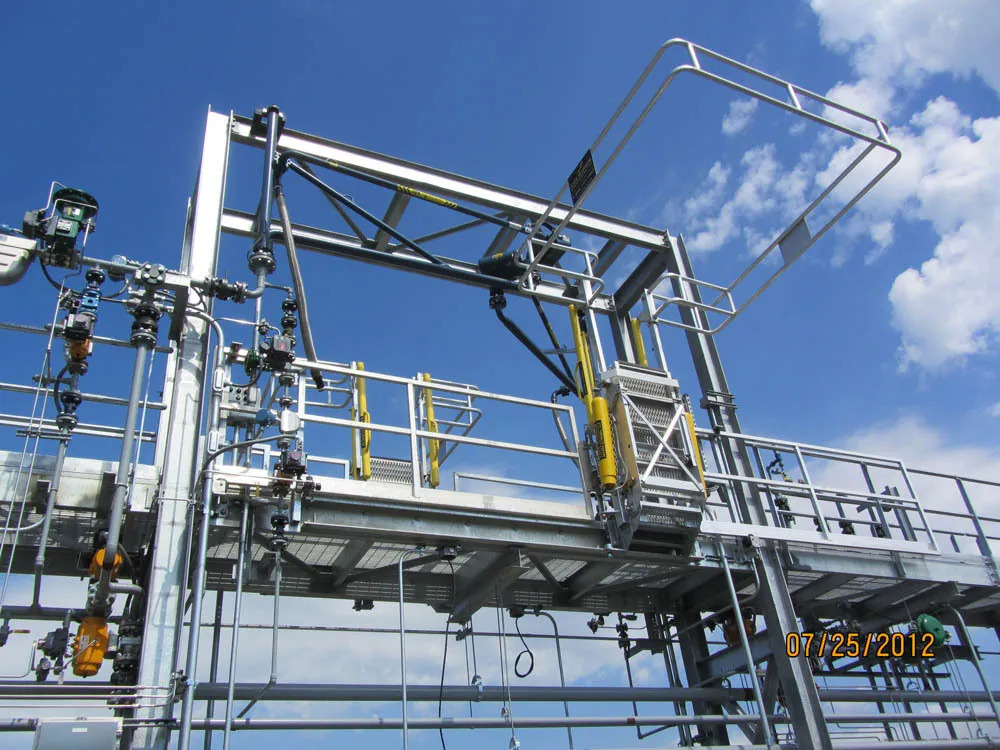
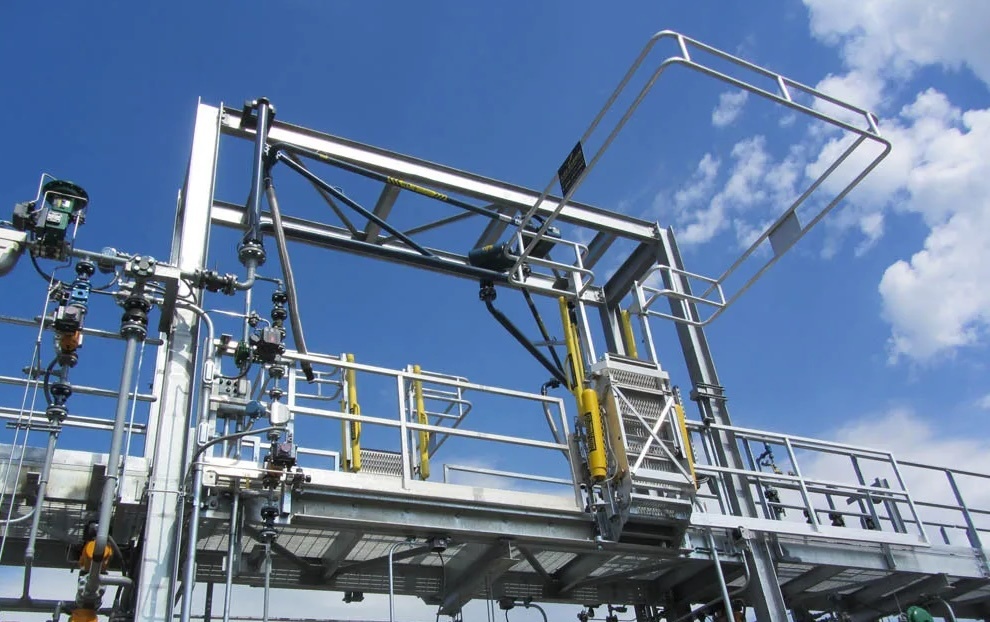
A loading platform is only as useful as the access it provides. Trailers vary in height. Hatch positions shift. Weather, throughput, and turnover all influence how a rack performs over a 20-year service life. Safe Harbor builds loading rack systems with these variables accounted for from day one, combining heavy-duty steel construction, counterweighted gangways, and self-adjusting safety cages that conform to the vehicle below.
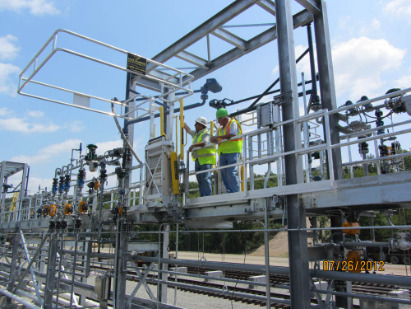
Each system is engineered to meet OSHA 1910 fall protection standards and is configured for the specific loading scenario, whether that is a single drive-through bay or a multi-position rack handling continuous shift work.
Standard loading rack specifications include:
- Pre-engineered platform configurations and custom designs available
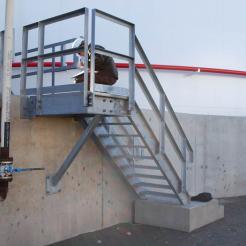
- 1½" standard pipe top rail designed to meet OSHA standards
- Serrated bar grating walk surfaces available in stainless steel, aluminum, or fiberglass
- Platforms configured to support one or multiple gangways as required
- Design loads for footing requirements available on request

Loading Rack Applications
Loading racks fall into three primary application categories, each engineered around the vehicle being serviced and the operational demands of the site.
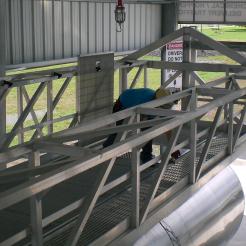
Truck Loading Platforms Designed for tanker trucks, hoppers, dry bulk trailers, and pneumatic trailers. Truck loading platforms provide elevated, fall-protected access for top-load operations across logistics, chemical, and bulk material facilities.
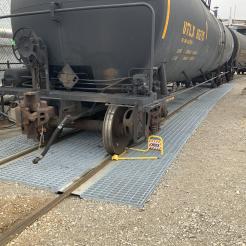
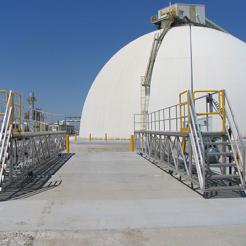
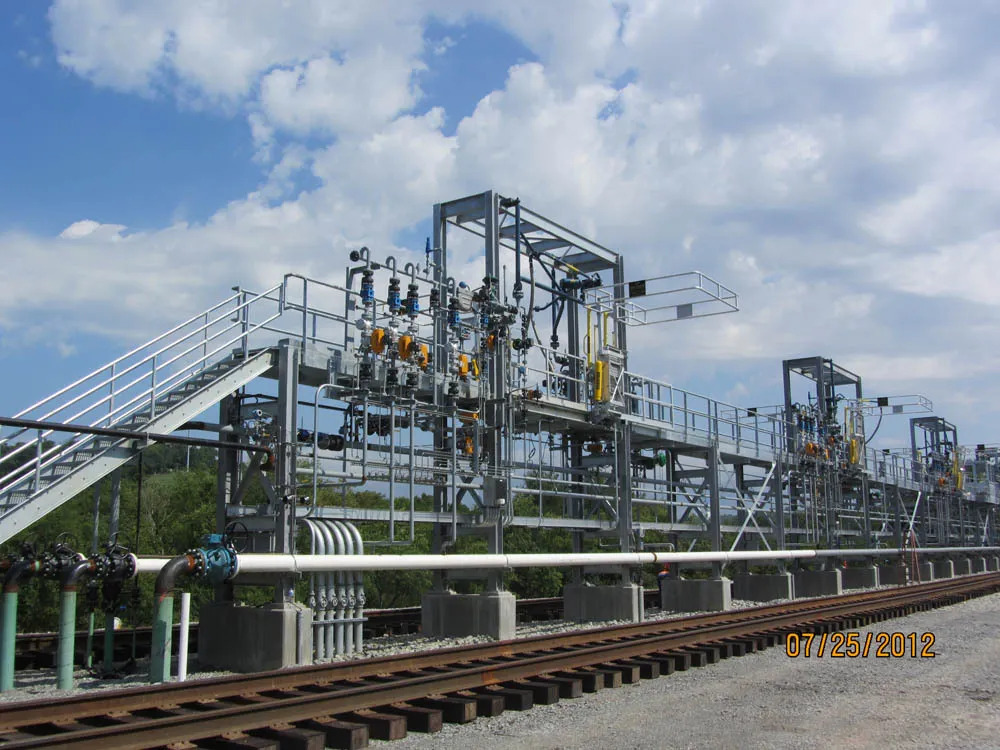
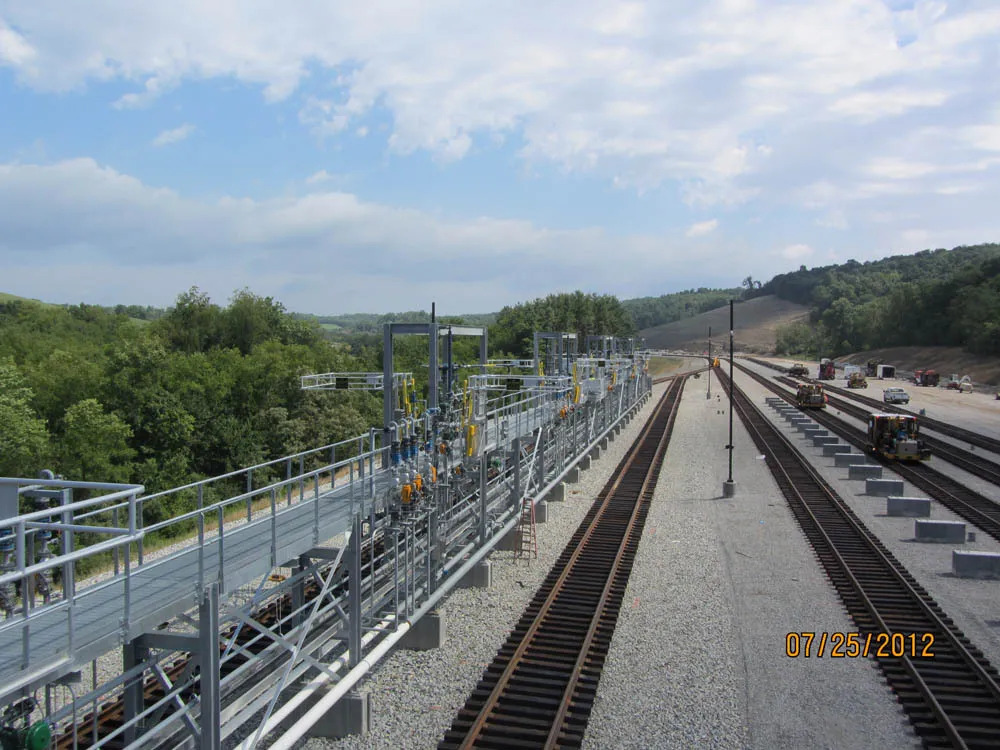
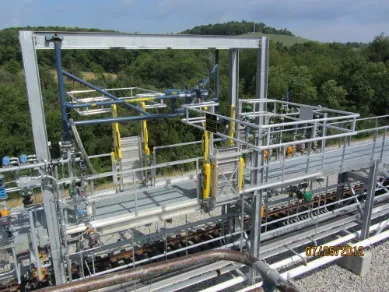
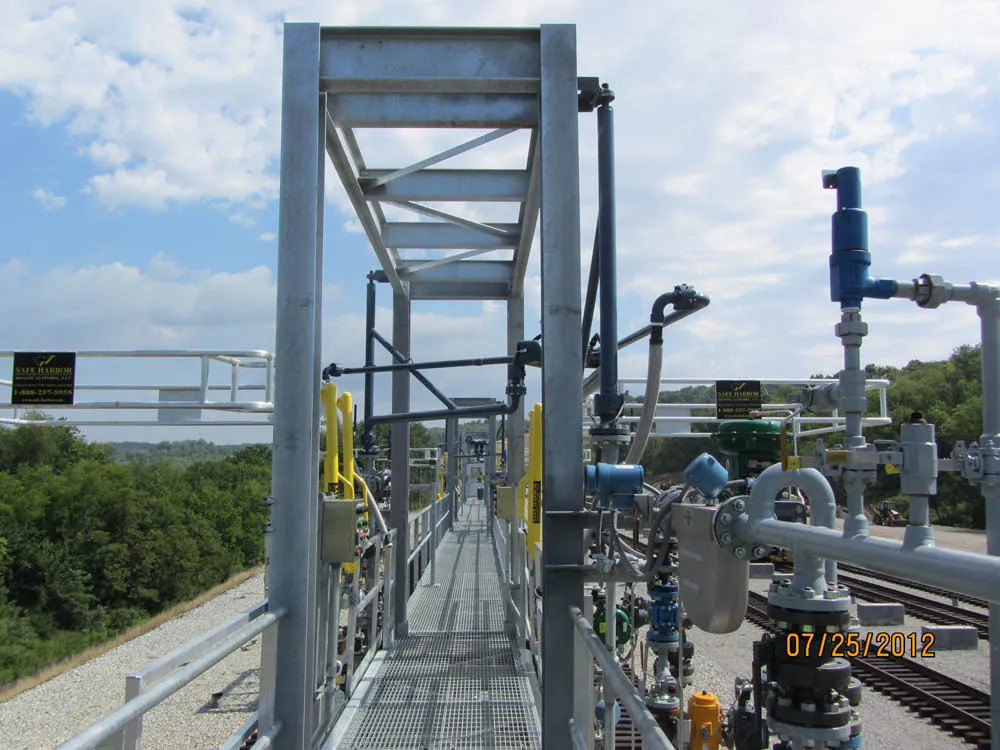
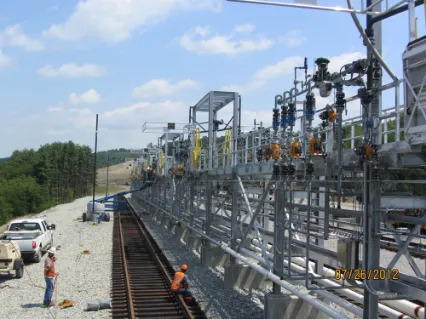
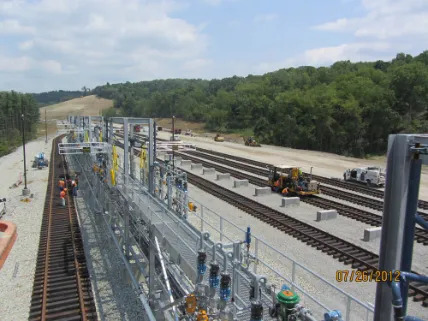
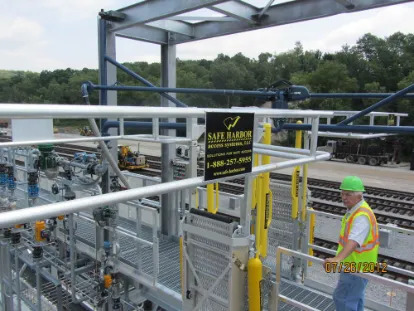
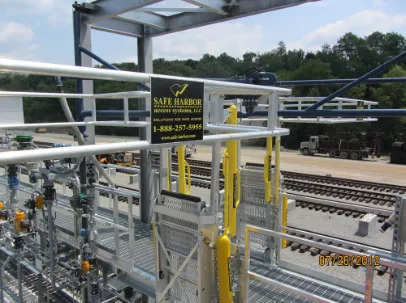
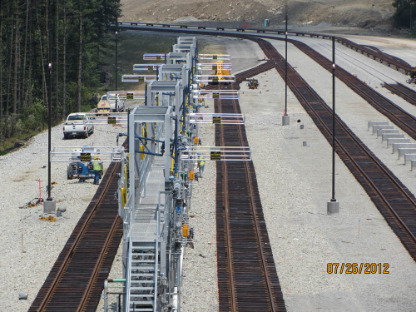
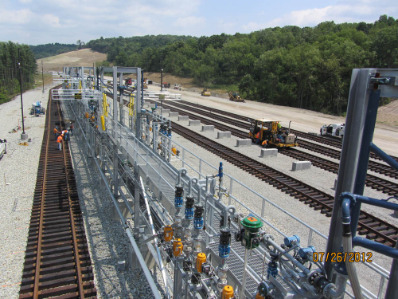
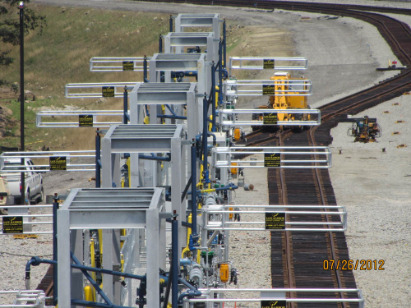
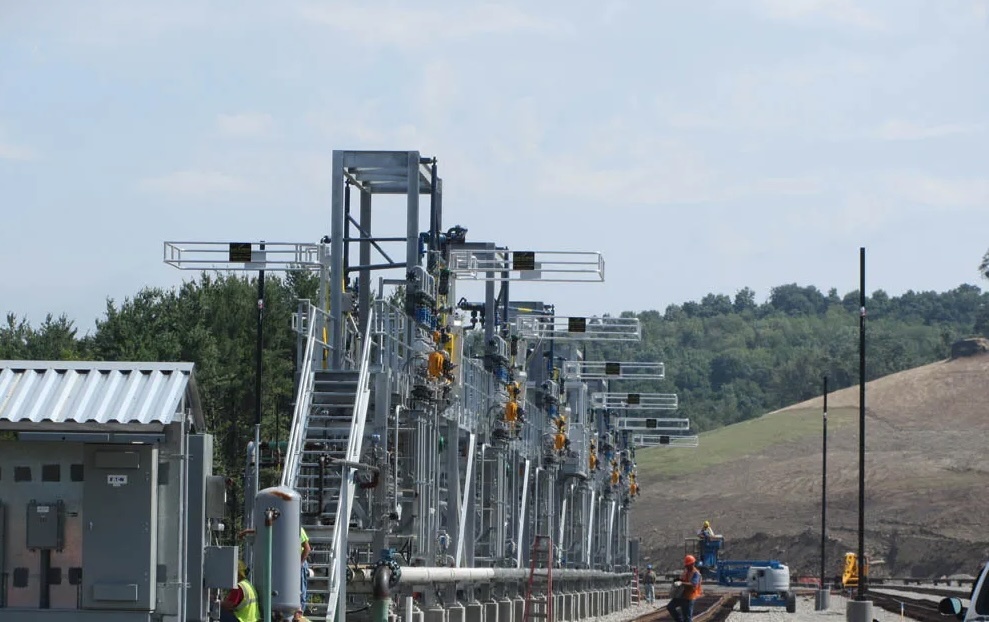
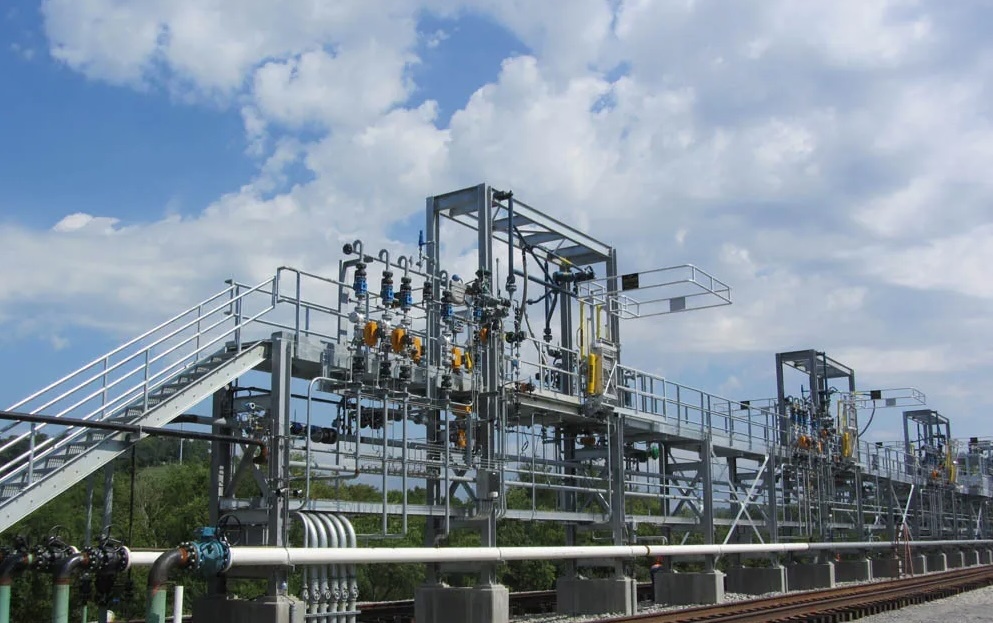
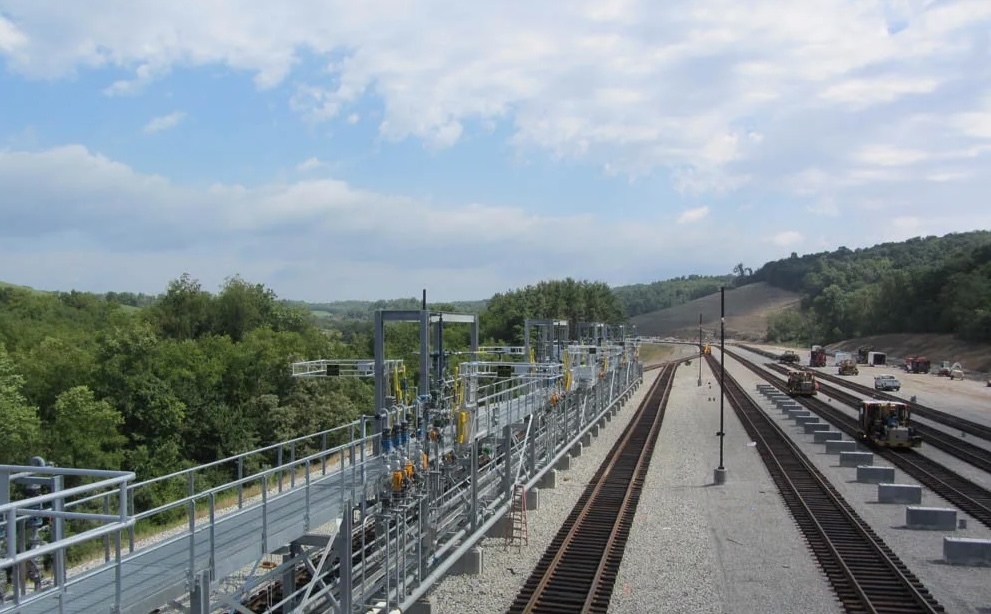
Railcar Loading Platforms Engineered for tank cars, covered hoppers, and other rail vehicles. Railcar loading platforms support sustained throughput with multi-position access, swing gates, and gangways calibrated for the height and spacing of rail traffic. Systems can be engineered to provide safe access regardless of whether railcars are coupled or uncoupled.
Portable Transloading Platforms For operations where fixed infrastructure is not practical, Safe Harbor provides mobile loading racks for rail, trucking, marine, and oil and gas applications. These transloading platforms deliver fall-protected access for loading and unloading at temporary or multi-site facilities. Customized configurations are available, and all portable platforms are built to OSHA standards.
Common applications across all three categories include cement loading and unloading, frac sand handling, asphalt operations, ethanol transfer, and other bulk liquid and dry material loading programs.
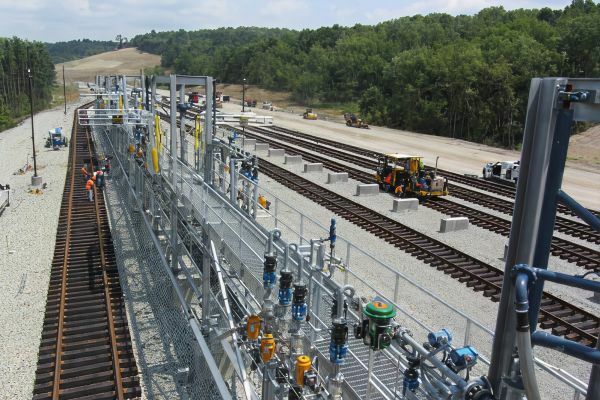
Structural Configurations for Multi-Position Systems
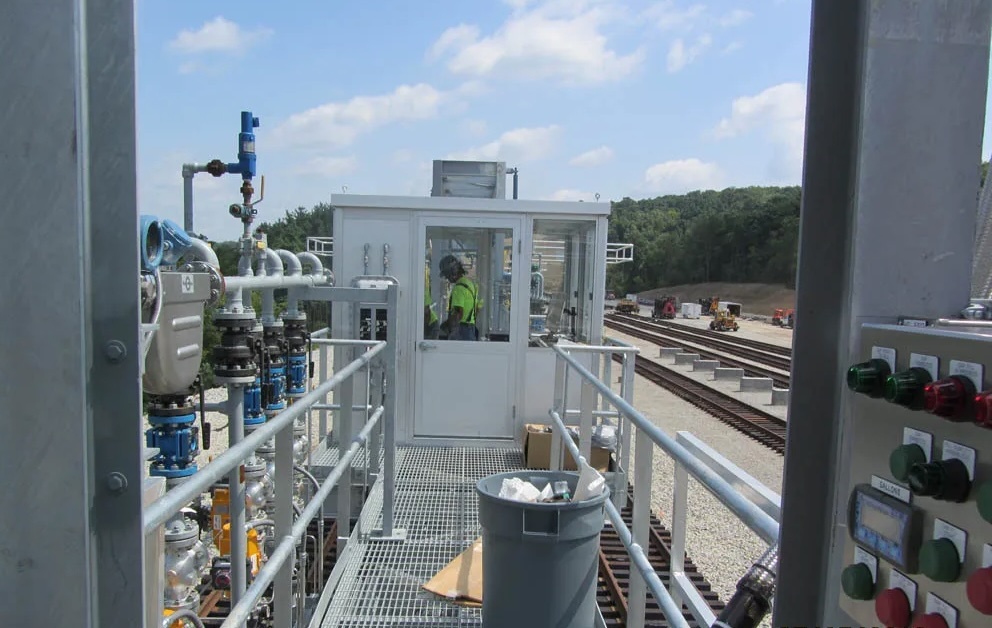
Multi-position and terminal-scale loading racks require a structural configuration decision early in the design process. Safe Harbor has engineered systems handling a hundred or more railcars, and the structural approach is determined by the site layout, piping requirements, and equipment integration before a single piece of steel is cut.
Single Pedestal Design
The single pedestal configuration requires a smaller footprint, making it the preferred option when site space is limited. Fewer concrete footings are required compared to tower support designs, which reduces installation time and cost without compromising structural performance.
Tower Support Design
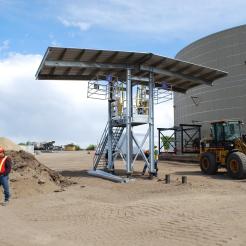
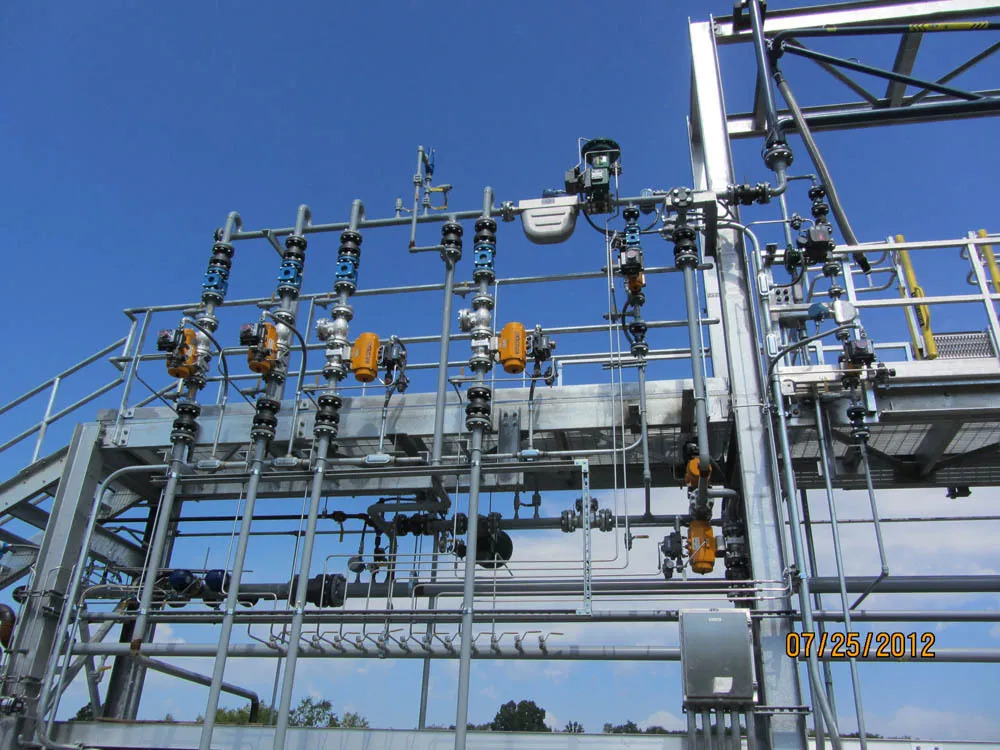
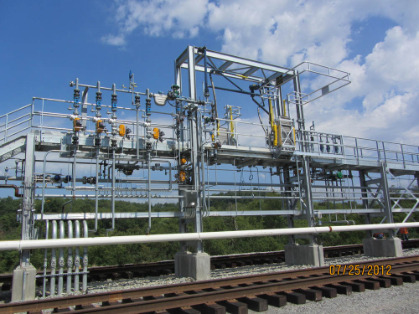
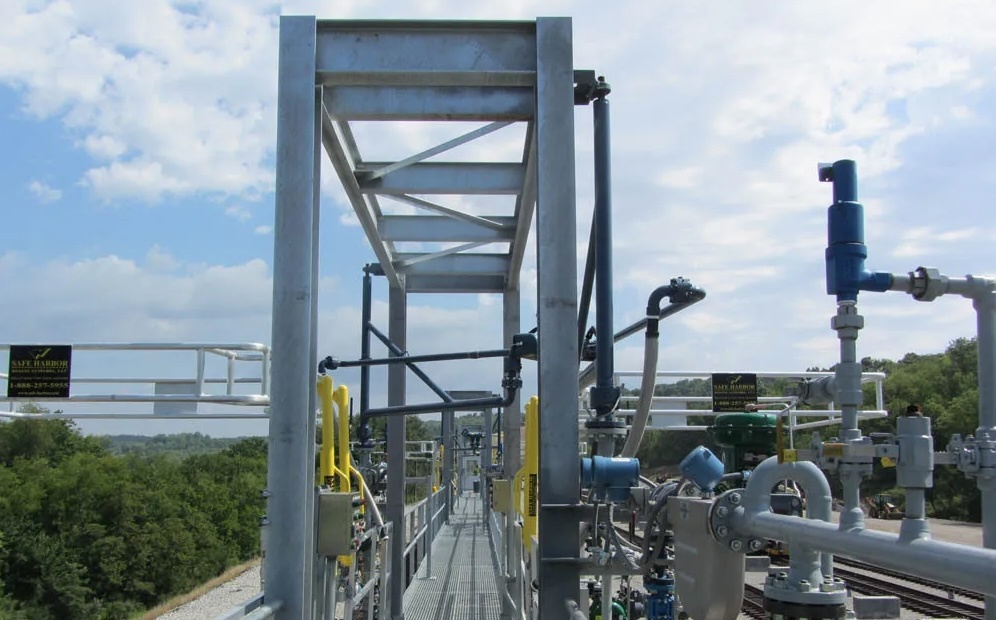
Tower support configurations are used when piping needs to run under the platform, when existing obstructions run down the center of the platform, or when a canopy is required. Tower supports are also the standard choice for systems integrating loading arms, where the structural envelope needs to accommodate additional equipment below the platform deck.
Why Industrial Operators Specify Safe Harbor
Safe Harbor has supplied industrial loading platforms to operations across North America for facilities that cannot afford downtime, rework, or compliance gaps. Every loading rack is engineered in-house, fabricated to project specifications, and supported through installation and commissioning. Stamped drawings, load calculations, and PE certification are available for projects that require them.
For procurement teams, EHS managers, and project engineers comparing vendors, the value is straightforward: a single source for engineering, fabrication, and installation of bulk loading racks built to last in the environments they operate in.
Find the Loading Rack Built for Your Operation
Select the application that matches your facility to view configurations, specifications, and engineering details:
- Truck Loading Platforms — top access for tanker, dry bulk, and pneumatic trailers
- Railcar Loading Platforms — fall-protected access for tank cars and covered hoppers
Not sure which configuration fits your site? Request a consultation and a Safe Harbor sales specialist will review your site conditions, along with vehicles, throughput, and footprint to recommend the right loading rack system.
Speak with a Loading Rack Sales Specialist
Share your vehicle profiles, site layout, and throughput requirements. Safe Harbor will return a configuration and quote tailored to your operation. Request a quote today. Safe Harbor uses local distribution in order to provide rapid onsite evaluations should the need be required.
Frequently Asked Questions
OSHA states that minimum live loads for platforms are 75psf which in structural steel means member sizes are based on this factor. Structural steel is also priced typically on a price per pound basis. With an Engineered platform system from Safe Harbor our design criteria are based on 100psf live loads. That means our systems will have larger member sizes which do come with a higher price due to the price per pound factor. We feel loading racks are constantly changing due to various customer reasons so having this minimum design criteria allows for expansion of items like toolboxes, operator sheds, safety showers, additional process piping, etc. We also design all of our stairs taking into consideration the adoption of the inner grabrails on stairs for safe access. We are the industry leader in staying ahead of all current and also proposed OSHA standards.
Pre-engineered loading racks use standardized platform dimensions, stair locations, and gangway placements, which reduces engineering time and material cost. They work well for sites with conventional vehicle profiles and adequate footprint. Custom loading racks are engineered around specific constraints, such as tight site geometry, mixed vehicle fleets, integrated loading arms, or non-standard hatch positions. Most Safe Harbor projects use a pre-engineered base configuration modified to fit the site, which balances cost with the precision required to load safely. We offer both systems to meet budget, and site requirement needs
The largest cost drivers are the number of loading positions, platform length and height, gangway type (self-leveling vs. flat ramp), safety cage selection, canopy inclusion, and finish. Stamped PE drawings, seismic design requirements, and integration with loading arms, track pans, or grounding systems also add to total project cost. Vehicle volume and throughput requirements influence whether a single-spot or multi-station configuration delivers better long-term value, so Safe Harbor reviews these variables before quoting rather than pricing from a catalog.
safe harbor’s LOADING RACKS
similar products
Safe Harbor Access Systems fabricates terminals, platforms and fall protection equipment to meet general and unique application requirements.