
Railcar Loading Platforms
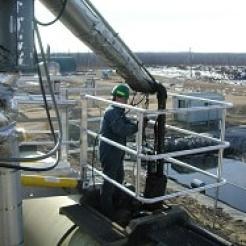
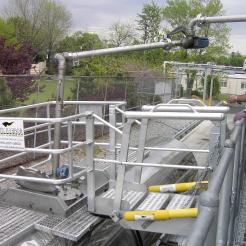
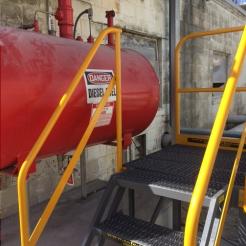
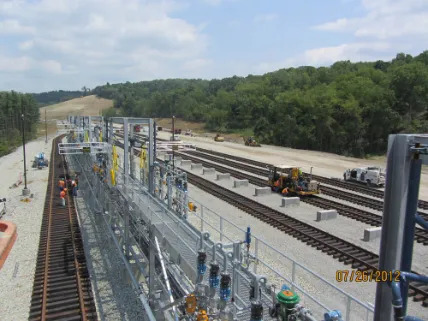
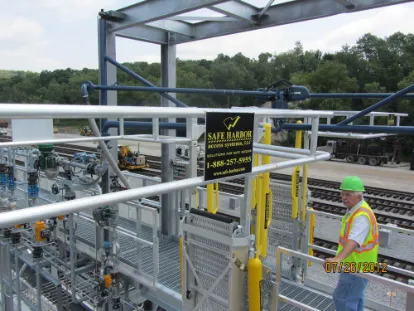
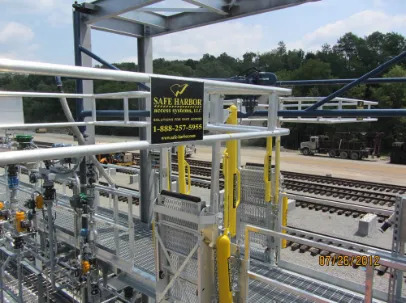
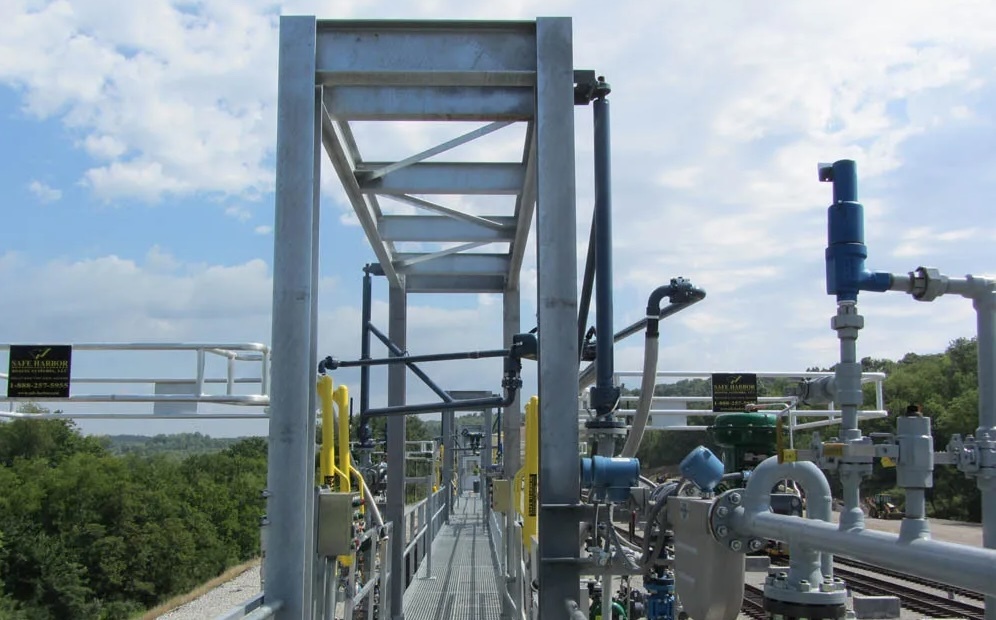
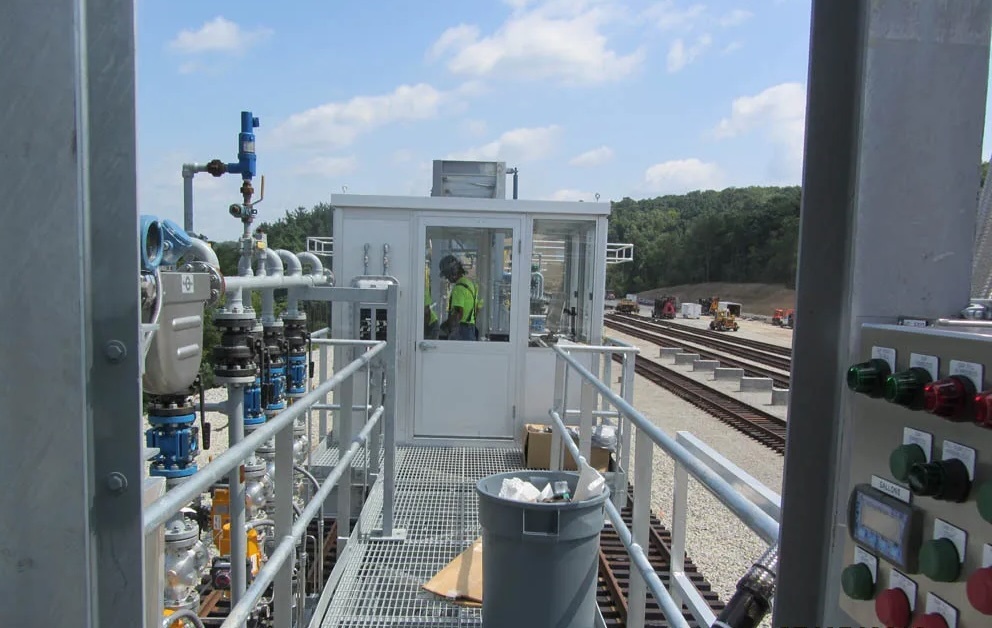
Loading and unloading railcars puts workers at risk of falls from heights that often exceed 10 feet. Railcar loading platforms give crews a stable, engineered path to the top of the car. Safe Harbor Access Systems builds these platforms for hopper cars and liquid tank cars and configures the same systems for ISO container access.
We have served the rail industry for over 15 years, engineering each railcar loading platform around the hatch configuration and the loading method a facility requires. Single-hatch platforms serve one operational profile. Multi-hatch and multi-car systems serve a different purpose, built for facilities loading several cars in a single shift.
Platform Configurations Built Around Your Hatch Count and Car Count
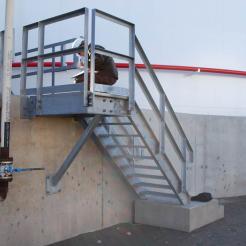
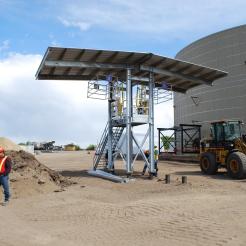
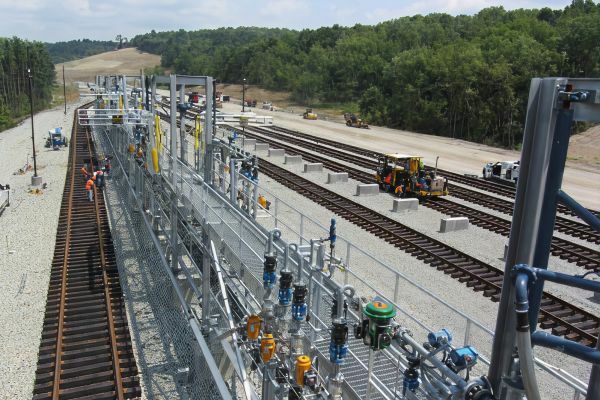
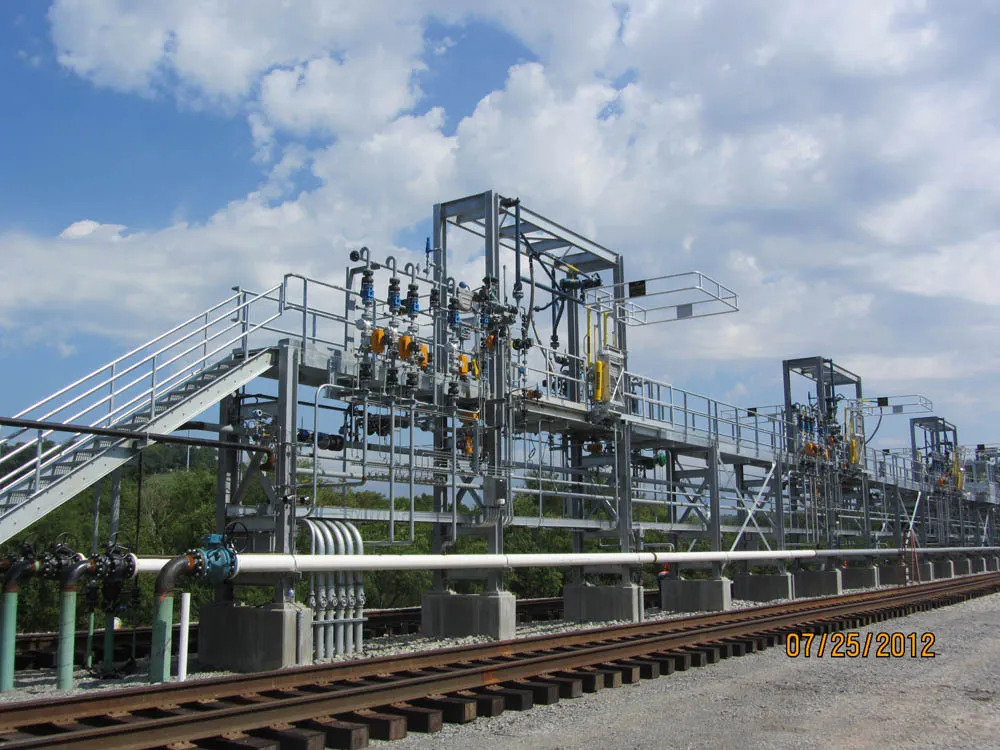
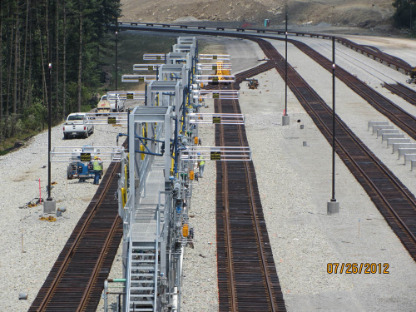
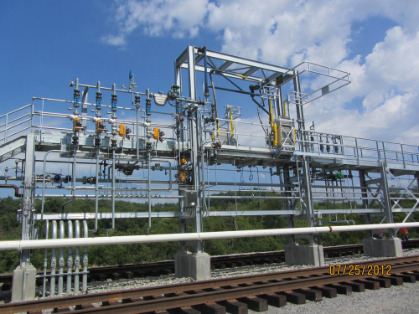
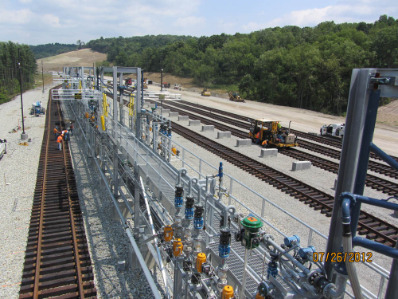
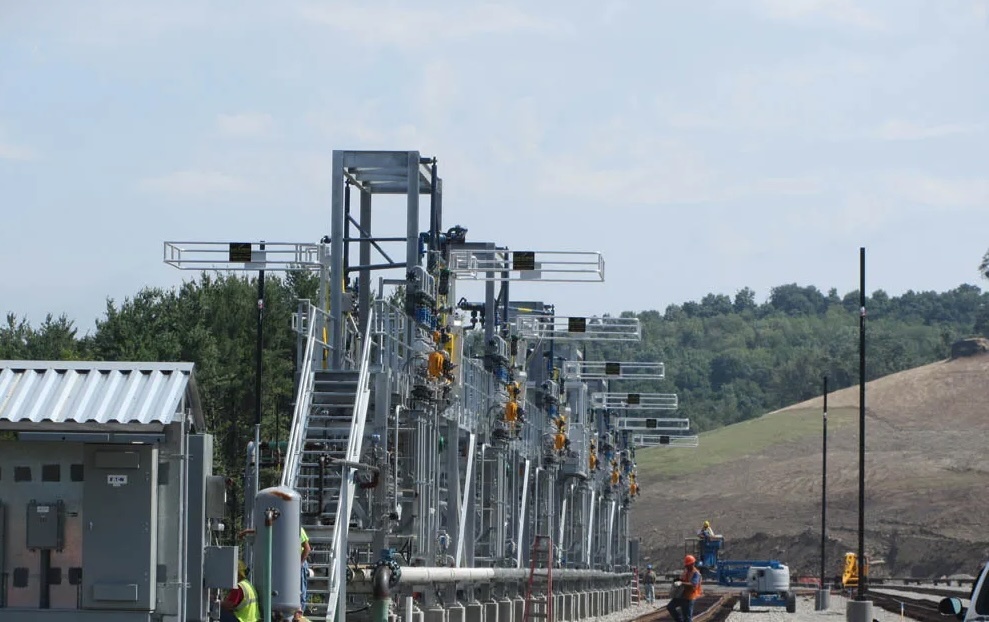
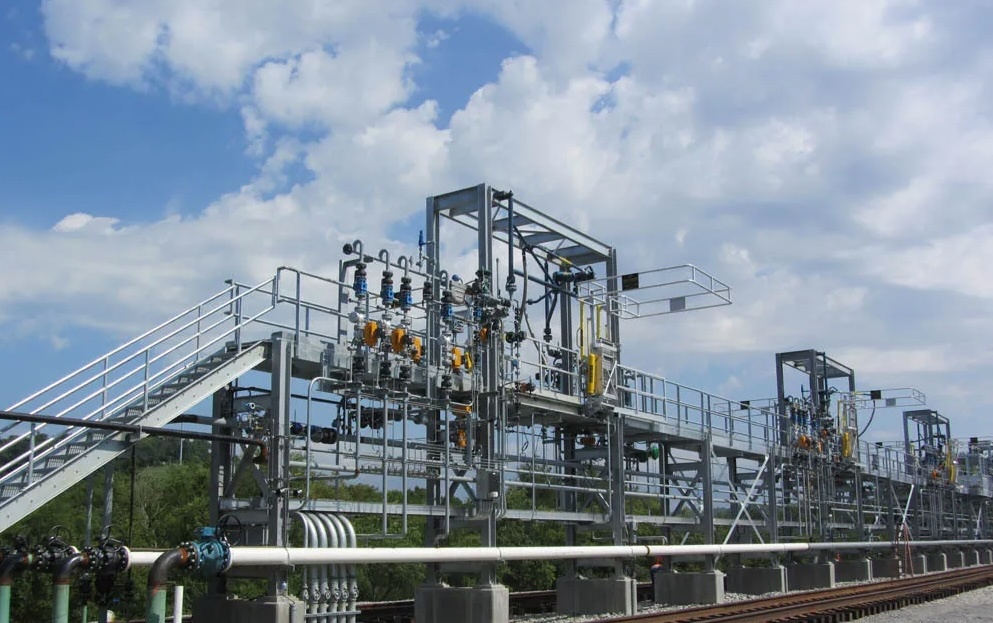
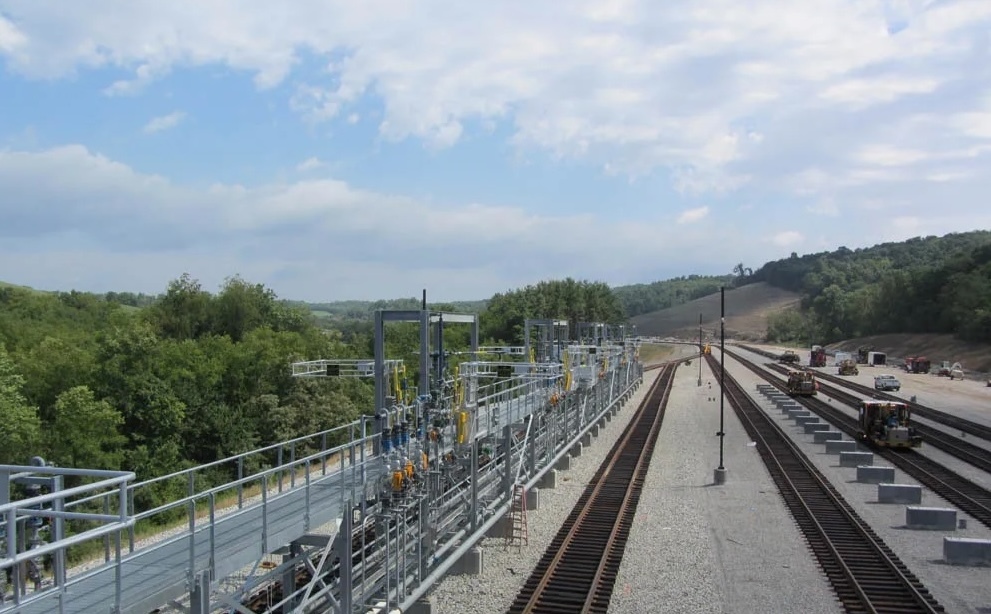
Every railcar loading application starts with two numbers: how many hatches a worker needs to reach, and how many cars need to load in the same operating window. A single-car, single-hatch platform gives one operator safe access to one loading point, and we build it around a single-pedestal support or a tower platform structure, depending on site height and layout. When a facility runs multiple hatches on one car, or several cars on one track, we scale that same platform into a multi-hatch or multi-railcar system, modular enough to extend as car counts grow.
We build each configuration from the same core parts:
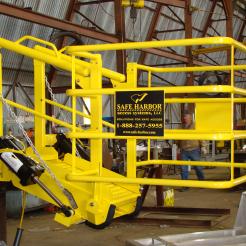
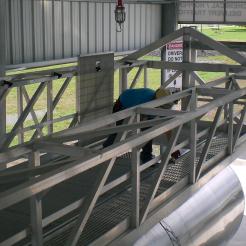
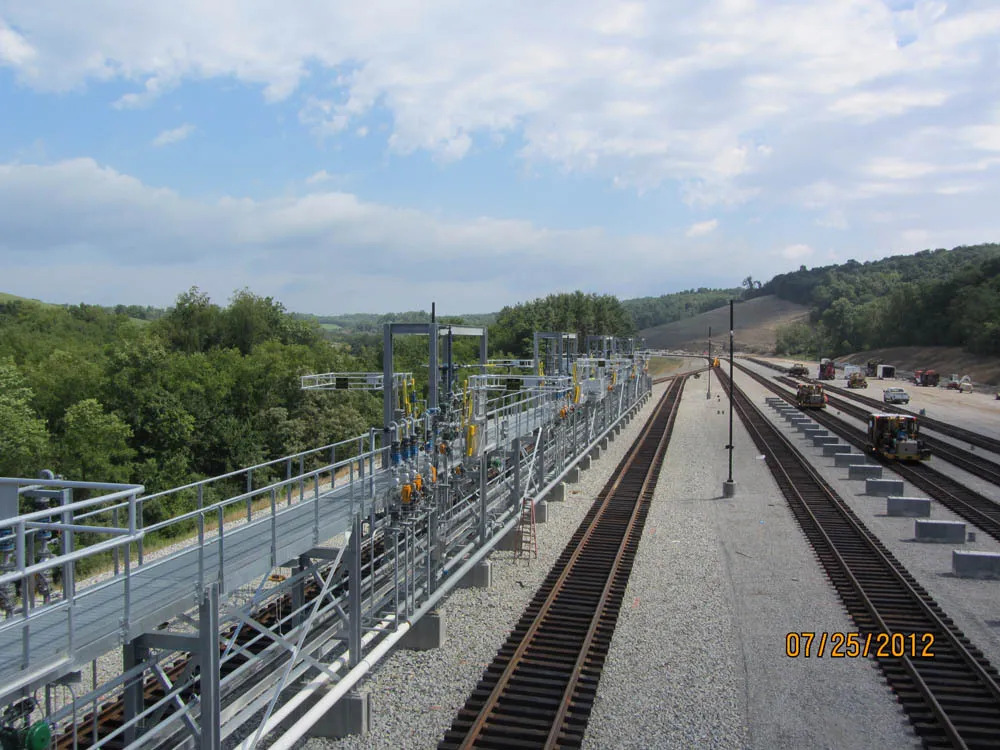
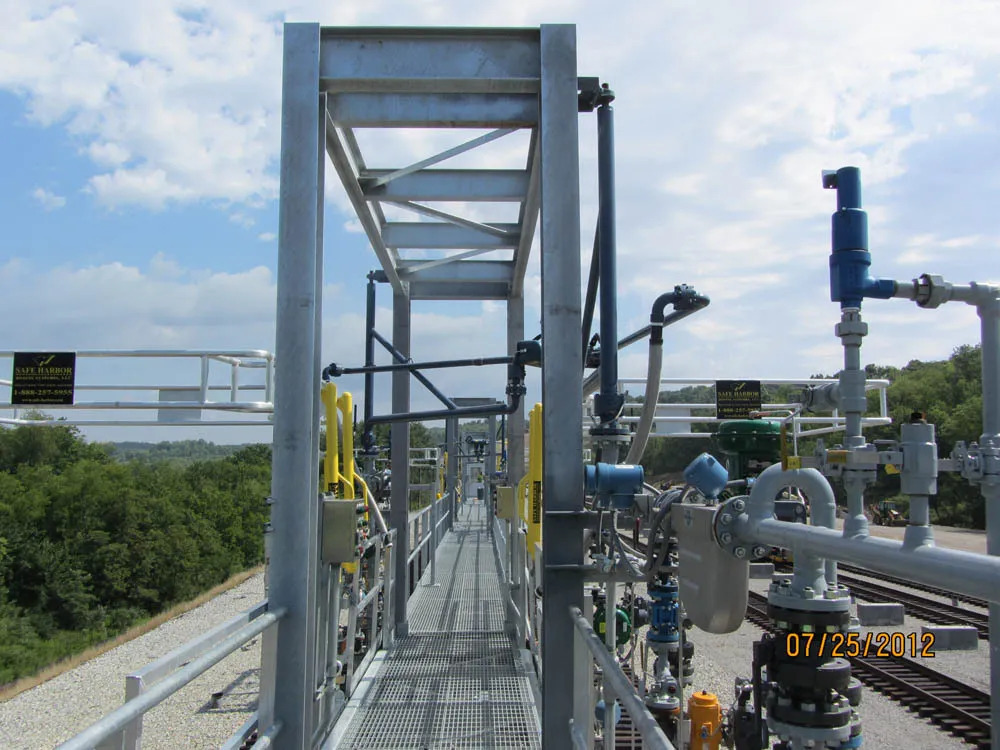
- Single or double-sided loading racks that form the working surface
- Tower platform supports or a single-pedestal base, depending on site height and layout
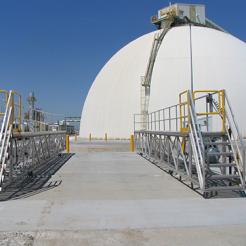
- Modular platform sections that extend as the hatch count or car count grows
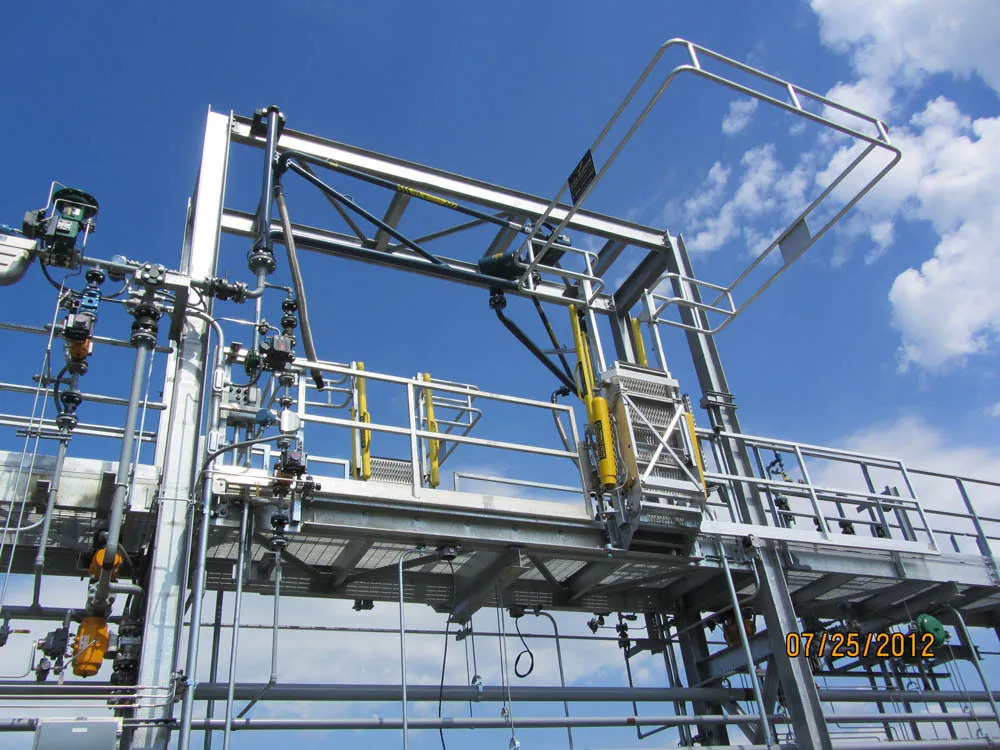
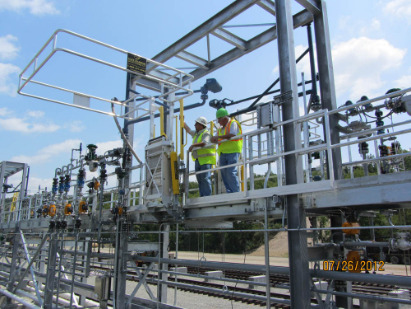
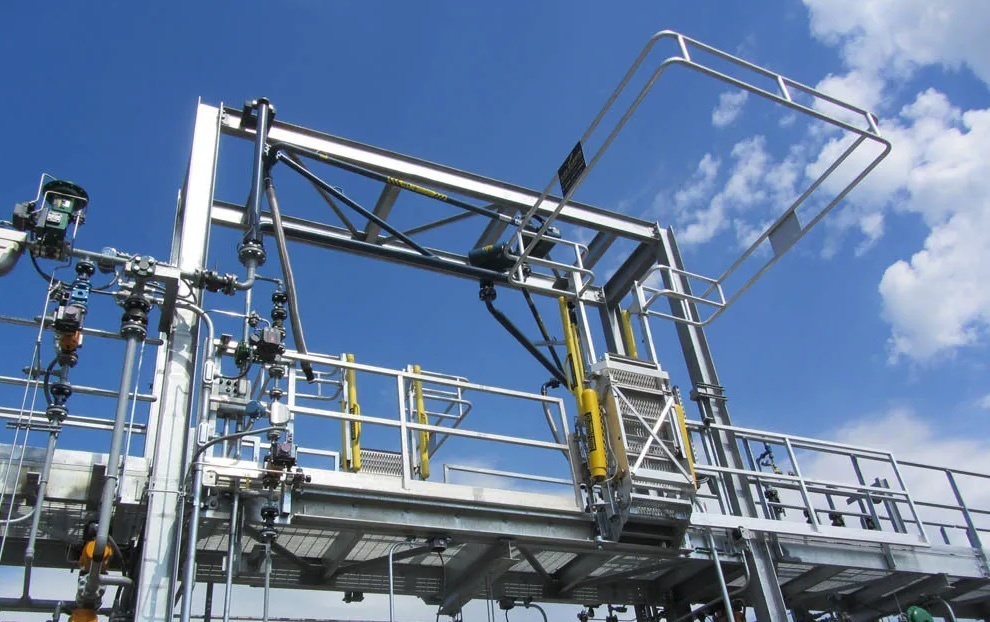
- Extending gangways that reach the hatch so an operator never has to lean or stretch

Multi-Hatch Systems for Higher Throughput
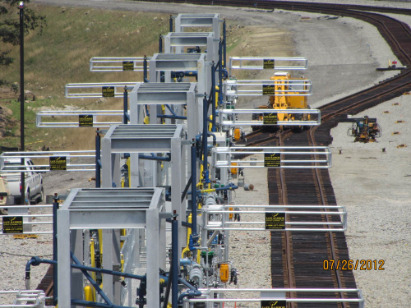
When a site loads several hatches at once, on one long car or across a working cut of railcars, our multi-hatch systems add features that single-hatch platforms do not need:
- Self-closing swing gates keep an open platform edge closed between hatch positions
- Snap chain openings provide a quick, low-effort way to close a gap without a full gate assembly
- Tracking handrails move with the operator, so rail protection follows a worker across the platform instead of stopping at a fixed post
Cars rarely spot in the exact same place twice. That's why we retrofit fixed-mount gangways to tracking gangways, using a modular base tread that converts a stationary mount into a pivoting, sliding one. Facilities running an older fixed platform can add this tracking capability without replacing the whole structure. Our railcar gangways cover tracking and fixed-mount options.
Top-Loading and Bottom-Loading Configurations
Not every railcar loads the same way, and a platform built around a top-loading hose does not automatically work for a bottom-loading connection. We configure railcar platforms for top-loading access, positioning the gangway and safety cage at the hatch opening for a direct line to the top of the car. Bottom-loading configurations shift the access point and hose routing to match a lower connection.
Facilities running mixed fleets, some top-loading tank cars and some bottom-loading, often need a platform that flexes between both without a full redesign. Our engineers review your fleet mix before quoting a configuration, so the platform matches the hose connections your cars use.
Configured for Your Railcar Type
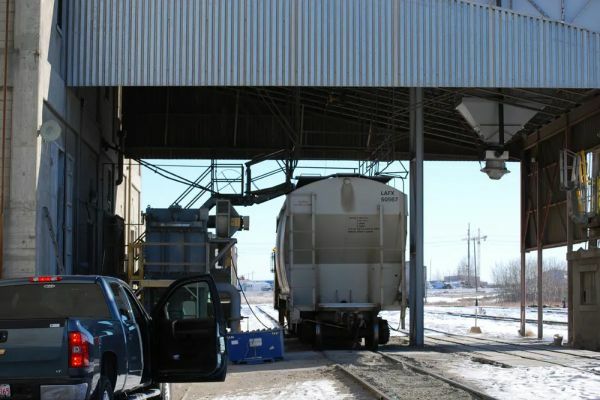
Hopper railcars carry dry bulk material through top hatches spaced along the length of the car, so we position access points to match that hatch spacing rather than build around one fixed opening. Liquid tank railcars load through a single dome or manway near the center of the car, which changes the platform footprint and often calls for a single-pedestal base instead of a tower structure.
ISO containers loaded on flatcars bring a different access challenge, since the top of the container sits at a different working height than a tank car or hopper, and our modular platforms adjust to that difference without a custom rebuild for every railcar type on site.
Fixed and Portable Platform Options
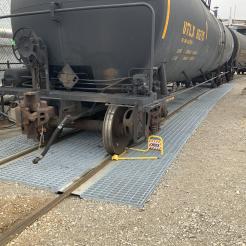
Most railroad loading platforms we build are fixed installations, engineered for a permanent track position and built to the same car-spotting pattern for the life of the site. Some facilities need portable access instead, for a siding that sees only occasional railcar traffic or for a location where a permanent structure isn't feasible. For those applications, our portable truck- and railcar-access systems give operators the same fall protection in a mobile unit that moves between loading spots.
Built to OSHA Fall Protection Standards
We design every configuration we build, from a single-hatch platform to a full multi-car system, to meet the OSHA General Industry Fall Protection Standard, 29 CFR 1910. Safe Harbor has applied that standard to railcar loading equipment for over 15 years, working directly with safety managers and procurement teams who answer to auditors or OSHA inspectors.
Our railcar fall-protection lineup includes platform-specific features such as safety cages and guardrails.
Get Railcar Loading Platforms Built for Your Site
Tell us your hatch count and loading method, and we will engineer a railcar loading platform around them. Our engineers review your fleet and track layout before recommending a configuration, so the quote you get matches the platform your site needs. Request a quote, and a Safe Harbor engineer will follow up within one to two business days.
Frequently Asked Questions About Railcar Loading Platforms
Clearance requirements come from the railroad operating the track, not from Safe Harbor. They vary by carrier and by track class, and they typically increase on curved track. Older state general orders often set different minimums. We will review your site's specific clearance requirement against the operating railroad's standard during the design phase, so the platform we build meets that requirement before fabrication starts.
A railcar loading platform provides physical access to the car, not the electrical bonding path itself. For flammable liquid transfer, NFPA 77 and API RP 2003 require bonding the tank car to the loading system before the product starts moving, since friction inside the hose and piping can build a static charge large enough to ignite vapor. Facilities typically handle this with a dedicated grounding and bonding system installed alongside the platform, wired to interlock with the transfer pump so loading cannot start until a verified ground connection is in place. Our engineers coordinate platform layout with your grounding contractor or existing system during design, so the two integrate without added rework.
Yes, in most cases. We design railcar loading platforms with the structural capacity to accommodate a loading arm mount, even if you add the loading arm in a later phase. Our team can also review an existing Safe Harbor platform to confirm its structural capacity. We typically install spill containment at grade rather than on the platform, so it usually runs as a separate project scope with its own timeline. If you're adding a loading arm to a platform we didn't originally engineer, we recommend a site evaluation first, since the retrofit depends on the platform's existing structural rating and the arm's weight and reach.
safe harbor’s LOADING RACKS
similar products
Safe Harbor Access Systems fabricates terminals, platforms and fall protection equipment to meet general and unique application requirements.